Daily message / devotional
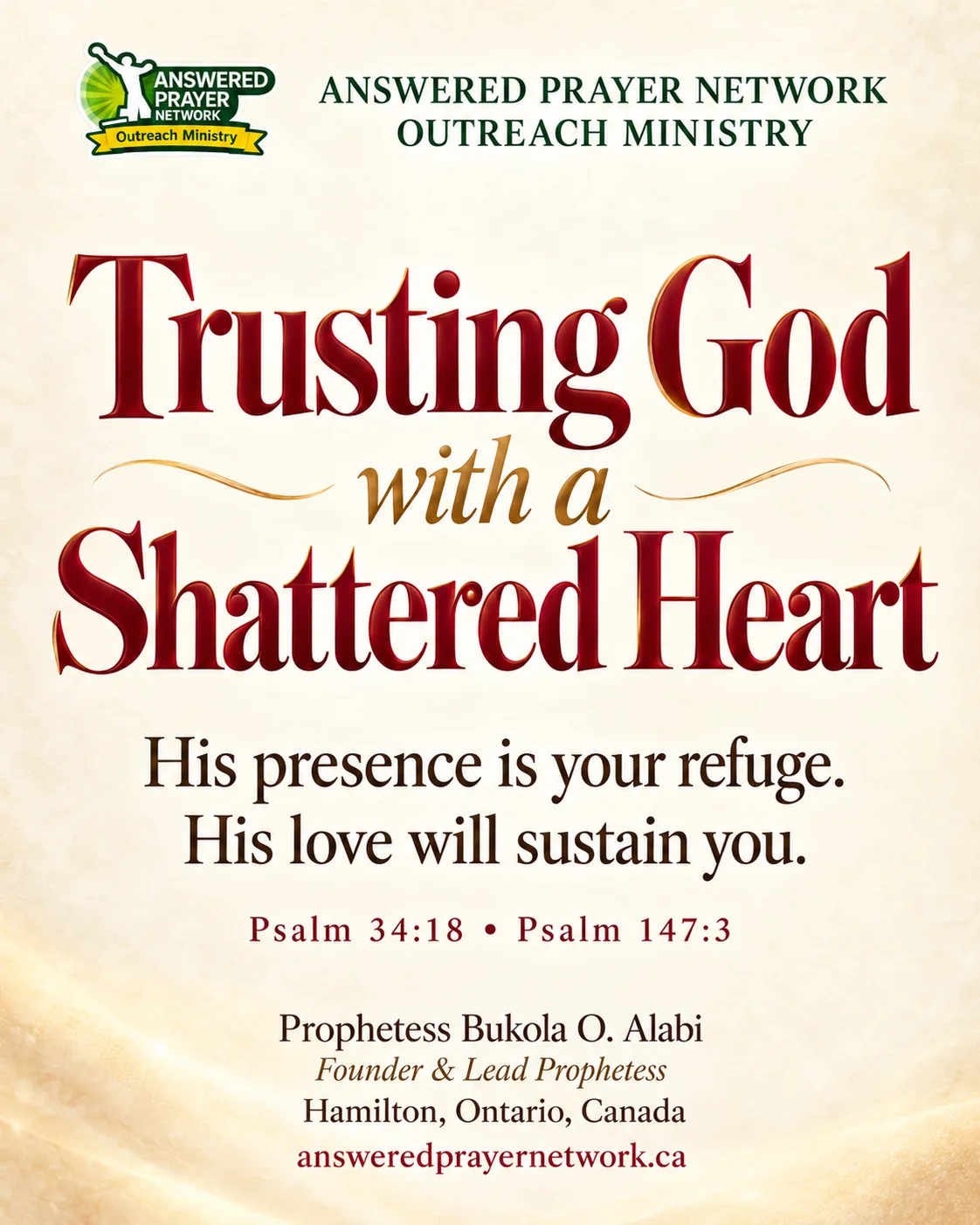
Trusting God with a Shattered Heart
Key Scripture
32 Therefore when Mary came to where Jesus was and saw him, she fell down at his feet, saying to him, “Lord, if you would have been here, my brother wouldn’t have died.” 33 When Jesus therefore saw her weeping, and the Jews weeping who came with her, he groaned in the spirit and was troubled, 34 and said, “Where have you laid him?” They told him, “Lord, come and see.” 35 Jesus wept. 36 The Jews therefore said, “See how much affection he had for him!” 37 Some of them said, “Couldn’t this man, who opened the eyes of him who was blind, have also kept this man from dying?” 38 Jesus therefore, again groaning in himself, came to the tomb. Now it was a cave, and a stone lay against it. 39 Jesus said, “Take away the stone.” Martha, the sister of him who was dead, said to him, “Lord, by this time there is a stench, for he has been dead four days.” 40 Jesus said to her, “Didn’t I tell you that if you believed, you would see God’s glory?” 41 So they took away the stone from the place where the dead man was lying. Jesus lifted up his eyes and said, “Father, I thank you that you listened to me. 42 I know that you always listen to me, but because of the multitude standing around I said this, that they may believe that you sent me.” 43 When he had said this, he cried with a loud voice, “Lazarus, come out!” 44 He who was dead came out, bound hand and foot with wrappings, and his face was wrapped around with a cloth. Jesus said to them, “Free him, and let him go.”Scripture quotations are from the World English Bible (WEB), public domain.
Daily message / devotional
Some wounds reach places that words cannot easily describe. They affect how you pray, how you see the future, and how safe you feel in the world. You can continue doing your work, answering messages, and encouraging others while carrying a sorrow that returns whenever you are alone. A shattered heart can still love God deeply and struggle to understand what has happened.
God sees that struggle. You do not have to make your pain sound spiritual before you bring it to Him. Psalm 34:18 reveals His nearness to the brokenhearted, and Psalm 147:3 speaks of His care for their wounds. Your brokenness does not make you unwelcome in His presence. You may come with tears, unanswered questions, and a prayer so faint that only He can hear it.
Trusting God with a shattered heart begins with believing that you can bring Him the truth.
Many believers feel pressure to appear strong. They fear that admitting their sorrow will dishonour God or suggest that their faith has failed. Yet Jesus wept at the tomb of Lazarus, even knowing that He would raise him. His tears show us that grief and divine power can be present in the same place. Love feels the weight of loss. Faith does not require us to deny that weight. (John 11:32–44.)
You can believe in the resurrection and still miss someone terribly. You can believe that God provides and still feel frightened about tomorrow. You can know that He loves you and still struggle through a lonely night. Bring those struggles into prayer. Let your faith speak honestly: “Father, I believe You are here, but this pain is heavy. Help me to keep turning towards You.”
The Psalms give us language for such prayers. David asked how long his distress would continue. He described sorrow in his heart before expressing confidence in God’s steadfast love. His trust did not begin with a cheerful account of his circumstances; it grew within an honest conversation with God. Lament allows the wounded heart to remain in relationship with the Lord while acknowledging its anguish. (Psalm 13.)
Hannah also brought her distress before God. Years of disappointment and provocation had left her weeping and unable to eat. When she prayed, Eli misunderstood her, but the Lord knew the sorrow behind her moving lips. Her story reminds us that human misunderstanding does not prevent God from receiving a sincere prayer. When you cannot explain yourself to everyone, you can still pour out your heart before Him. (1 Samuel 1:6–18.)
There is a particular difficulty in trusting God when the wound involves something you prayed about earnestly. You committed the relationship, the person, or the hope to Him, and the outcome still broke your heart. In such seasons, faith must wrestle with questions that easy answers cannot settle.
Scripture gives us room to acknowledge that we do not understand everything. Trusting the Lord means depending on His wisdom beyond the reach of our own understanding. You may need time to grieve what happened without being able to explain why it happened. You can entrust that unanswered question to God without inventing an explanation for it. (Proverbs 3:5–6.)
Be careful about allowing pain to become your final judgement of God’s character. The betrayal of a person does not reveal the heart of the Father. Another person’s cruelty does not define your worth. A loss, however devastating, does not prove that God has ceased to love you. Look again at Jesus Christ: His compassion, His cross, His resurrection. Christian trust rests in the love God has revealed through Him. (Romans 8:32–39.)
In Gethsemane, Jesus prayed in deep anguish and surrendered Himself to the Father’s will. His obedience was costly. He understands the struggle of a heart facing suffering, and Hebrews invites us to approach Him for mercy and grace in our time of need. When obedience feels difficult because you are hurting, you are approaching a Saviour who understands human weakness. (Luke 22:39–44; Hebrews 4:14–16.)
Sometimes trusting God will mean taking one small, faithful step. You may have strength for a short prayer, one passage of Scripture, or an honest conversation with someone who cares. Receive the grace available for that day. You do not have to force yourself to feel tomorrow’s courage tonight. Christ teaches us to bring our daily needs to the Father. (Matthew 6:11, 34.)
Protect your heart from the bitterness that pain can nourish. Unhealed anger can begin to govern your decisions, turning every new relationship into a trial and every act of kindness into something suspicious. Ask God to help you recognise that danger without condemning yourself for being wounded. His healing can teach you to love with discernment and to establish wise boundaries. (Ephesians 4:31–32; Proverbs 4:23.)
Forgiveness also requires honesty. It does not demand that you call evil good, hide wrongdoing, or immediately restore trust. You can surrender vengeance to God while pursuing truth and maintaining necessary boundaries. Reconciliation requires more than words; trust needs evidence of changed conduct. God’s call to forgive should never be used to silence a wounded person. (Romans 12:18–21; Luke 17:3–4.)
Allow yourself to receive care. A trusted friend, a compassionate pastor, or a counsellor may help you carry what has become too heavy to bear alone. Scripture calls believers to bear one another’s burdens. Accepting support can be an expression of faith in the God who works through the love of His people. (Galatians 6:2.)
Healing may unfold gradually. A memory can bring tears after a peaceful week. An anniversary can reopen sorrow you thought had quietened. Such moments do not erase the growth God has brought into your life. Return to Him with the pain as it is today. His mercy is not exhausted because you need comfort again. (Lamentations 3:22–23.)
God’s comfort does not make a loved one replaceable or an injustice acceptable. It gives us strength to live truthfully in the presence of what has happened. Over time, joy may return without erasing love, and peace may deepen without answering every question. The Lord can help you carry your story without allowing its deepest wound to govern every part of your future. (2 Corinthians 1:3–4.)
You can place a broken heart in God’s hands before you know how to put its pieces into words.
When prayer feels beyond you, remember that the Holy Spirit helps us in our weakness. God does not require polished language from a grieving soul. A whispered “Help me,” offered sincerely, is a prayer. Silence before Him can also become a place of surrender when words have failed. (Romans 8:26–27; Psalm 62:8.)
Beloved, keep bringing your heart to the Lord. Bring the memories, the disappointments, the questions, and the future you are afraid to face. Ask Him for the courage to live, the wisdom to choose well, and the grace to remain tender without becoming defenceless.
Your tears do not disqualify you from His care. Your weariness does not place you beyond His reach. You are loved by the Christ who entered human suffering and opened the hope of eternal life.
Even with a shattered heart, you can still take the next step with God.