Daily message / devotional
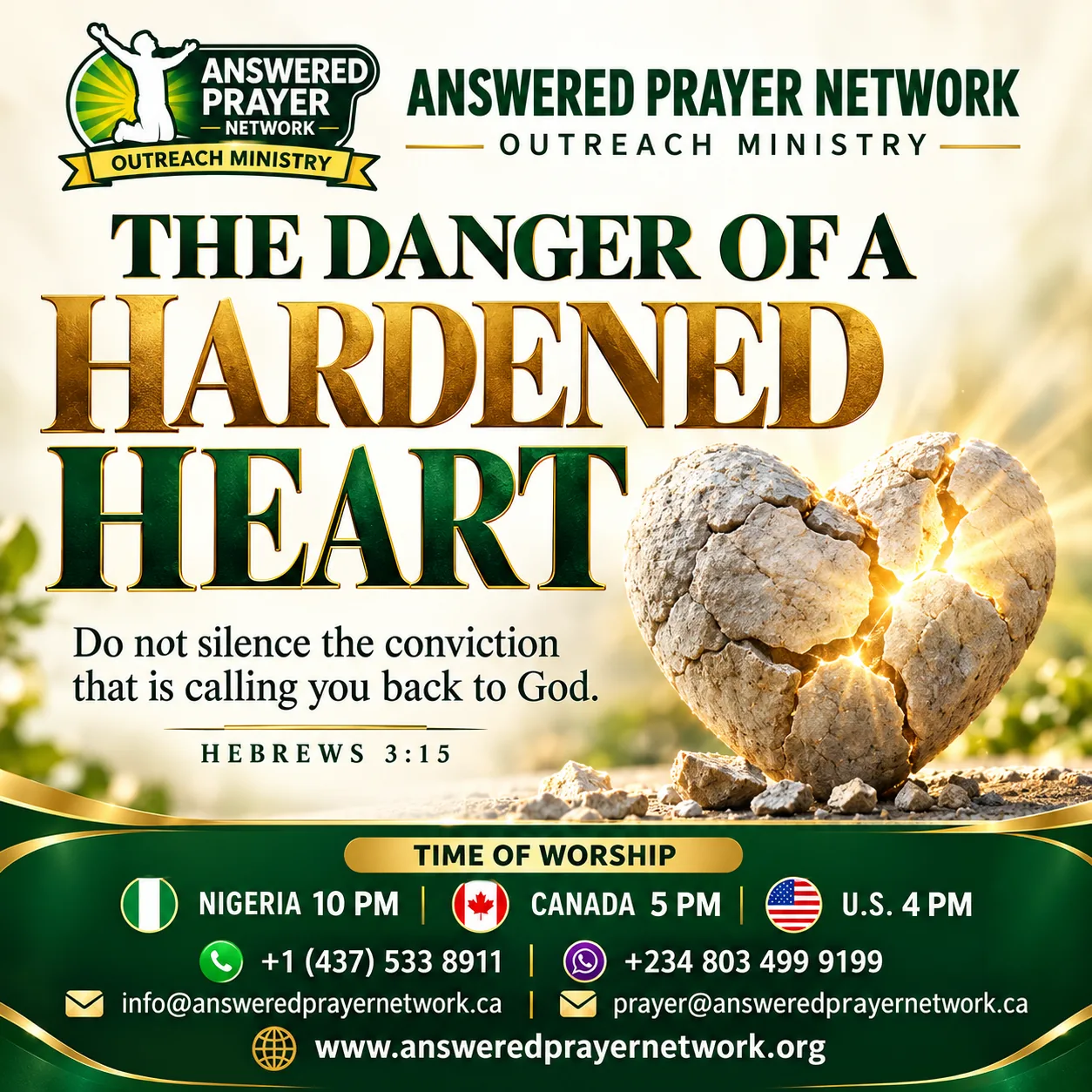
THE DANGER OF A HARDENED HEART
Key Scripture
8 Here people who die receive tithes, but there one receives tithes of whom it is testified that he lives. 9 We can say that through Abraham even Levi, who receives tithes, has paid tithes, 10 for he was yet in the body of his father when Melchizedek met him. 11 Now if perfection was through the Levitical priesthood (for under it the people have received the law), what further need was there for another priest to arise after the order of Melchizedek, and not be called after the order of Aaron? 12 For the priesthood being changed, there is of necessity a change made also in the law. 13 For he of whom these things are said belongs to another tribe, from which no one has officiated at the altar. 14 For it is evident that our Lord has sprung out of Judah, about which tribe Moses spoke nothing concerning priesthood. 15 This is yet more abundantly evident, if after the likeness of Melchizedek there arises another priest,Scripture quotations are from the World English Bible (WEB), public domain.
Daily message / devotional
A hardened heart is a dangerous condition because it can hear the truth and still refuse to surrender. It can recognise wrongdoing, feel the weight of conviction, and continue defending the very thing God is calling it to abandon. The person may still attend church, speak the language of faith, and participate in spiritual activities, while inwardly resisting the authority of God.
The danger becomes greater when that resistance begins to feel normal.
Scripture repeatedly warns us against hardening our hearts when we hear God’s voice (Hebrews 3:7–8, 15). This warning demands personal examination. Whenever God exposes something in our lives, we face a choice: receive His correction or protect our disobedience. The way we respond shapes what our hearts become.
Hardness often develops through repeated refusals. A person postpones repentance, dismisses a warning, justifies an offence, or rejects correction. Over time, excuses become convictions. What once troubled the conscience becomes acceptable. Eventually, the person begins to resent anyone who challenges the behaviour.
This is why Hebrews 3:13 warns about the deceitfulness of sin. Sin deceives us into believing that we can continue on the same path without becoming changed by it. It persuades us that repentance can wait, that our circumstances excuse everything, and that God’s patience means He approves.
But every act of disobedience we deliberately defend makes surrender more difficult.
Pharaoh’s life reveals this danger with painful clarity. When the plagues became unbearable, he acknowledged his wrongdoing and asked for relief. Yet when the pressure lifted, he returned to resistance (Exodus 9:27–35). His words sounded repentant, but his decisions exposed his heart.
We must examine ourselves honestly here. Have we asked God to remove consequences while refusing to abandon their cause? Have we promised obedience during a crisis, then forgotten that promise when peace returned? Have we wept over the discomfort of our situation while continuing to protect the sin within it?
Repentance requires a change of direction. Tears may express sorrow, but surrender gives that sorrow a purpose.
A hardened heart also turns correction into conflict. Instead of considering whether a rebuke contains truth, it searches for faults in the person delivering it. It explains, argues, blames, and retaliates. Its greatest concern becomes preserving its image.
A teachable believer tests counsel against Scripture and remains willing to acknowledge what is true. Spiritual maturity includes the ability to say, “I was wrong.” A person who can preach boldly but cannot receive correction has a serious area of growth to address.
No title, position, gift, or length of service places anyone beyond the need for repentance.
Jesus’ response in Mark 3:5 shows how seriously He regards hardness of heart. He was grieved by the stubbornness of people who watched a suffering man while looking for a reason to accuse Him. Their concern for their own position had crowded out compassion.
This reveals another danger: a hardened heart can become comfortable with other people’s pain. It may defend religious appearances while neglecting mercy. It may speak passionately about righteousness while humiliating people, dismissing their struggles, or refusing to make amends.
We should ask ourselves whether our faith is making us more compassionate, more truthful, and more accountable. If our religious activity increases while our willingness to love decreases, we need to stop and examine what is happening within us.
Pain can also become a place where hardness takes root. Betrayal, disappointment, and injustice can tempt us to build a life around resentment. We begin rehearsing the offence until bitterness influences our speech, relationships, and decisions.
Being wounded does not mean a person has a hardened heart. Grief, exhaustion, and honest questions should be brought before God with freedom. The danger arises when we begin using our wounds to justify cruelty, revenge, or a permanent refusal to forgive.
God cares about what happened to us. He also cares about what that experience is producing within us. We can seek wise boundaries and accountability while asking Him to keep hatred from governing our hearts.
The Israelites witnessed God’s mighty works, yet repeatedly resisted His direction. Hebrews 3:16–19 connects their rebellion with unbelief and their failure to enter His rest. Their history teaches us that witnessing a miracle does not automatically produce lasting obedience.
A person can remember yesterday’s deliverance and still reject today’s instruction.
We therefore need more than memories of powerful services and answered prayers. We need a continuing willingness to trust God when His Word challenges our desires. The true condition of the heart becomes visible when obedience costs something.
Romans 2:4–5 gives a sobering warning: God’s kindness is intended to lead us toward repentance, while stubbornness carries the danger of judgment. His patience should move us to respond. Every opportunity to return to Him is an expression of mercy.
Do not turn that mercy into an excuse for delay.
There is hope for the person who recognises that their heart has become resistant. God promises to give His people a new heart and a new spirit, replacing the heart of stone with a heart responsive to Him (Ezekiel 36:26).
Begin with honesty. Name the sin without decorating it with excuses. Confess the bitterness, pride, dishonesty, or disobedience that you have been protecting. Ask God to restore your sensitivity to His Word. Then take the step of obedience you already know is necessary.
If you owe an apology, offer it sincerely. If you have caused harm, seek to repair it. If you have been feeding resentment, bring it before God. If you have rejected sound correction, reconsider it with humility. Let repentance become visible in your choices.
Peter’s failure was grievous, but he wept over it and was later restored by Jesus (Luke 22:61–62; John 21:15–17). His story reminds us that failure can be brought into the presence of Christ. We do not have to defend it, disguise it, or allow shame to keep us away.
Guard your heart carefully. Remain willing to listen, willing to confess, willing to forgive, and willing to change. Treasure the conviction that draws you back to God.
When the Lord exposes what needs to change, answer Him with obedience. The truth you receive today may rescue you from the hardness you would otherwise carry into tomorrow.