Daily message / devotional
THE VOICE OF THE BLOOD
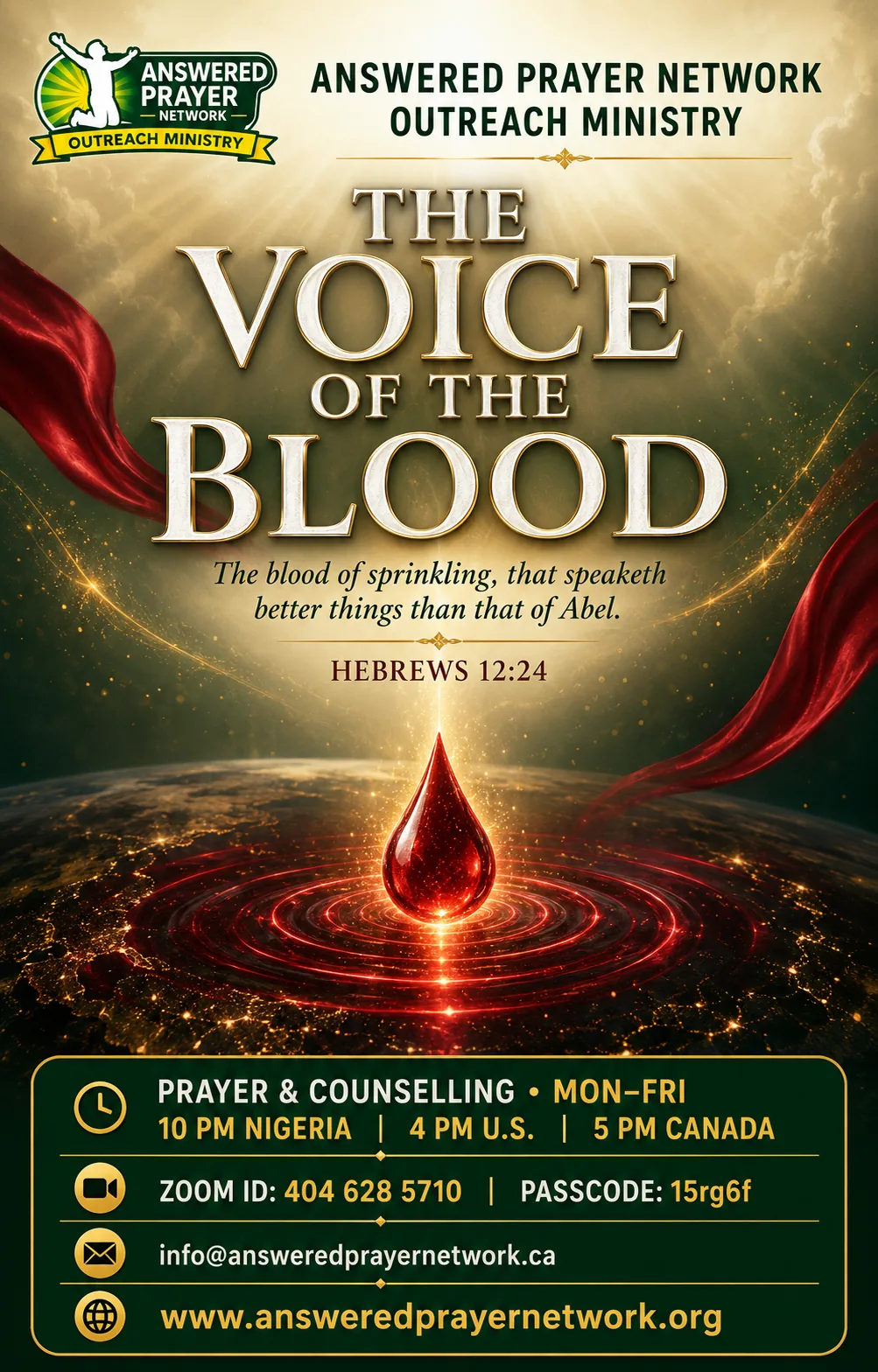
Key Scripture
[24] to Jesus the Mediator of the new covenant, and to the blood of sprinkling that speaks better things than that of Abel.New King James Version®, Copyright© 1982, Thomas Nelson. All rights reserved.
Daily message / devotional
Blood is not silent in the realm of the spirit. Scripture reveals that blood possesses a voice—a voice that speaks concerning life, covenant, justice, judgment, mercy, redemption, and destiny. Long after blood has been shed, its testimony may continue to cry before God.
When Cain murdered his brother Abel, he believed the matter was concealed. There was no human witness, no earthly court, and no visible evidence against him. Yet God said:
“The voice of thy brother’s blood crieth unto me from the ground.” — Genesis 4:10
Abel’s mouth had been silenced, but his blood continued to speak. The earth had received his body, but heaven had received the testimony of his blood. This reveals a profound spiritual truth: what humanity considers hidden may still be speaking before God.
However, the message of the gospel is that another blood has been shed—the precious blood of Jesus Christ. Abel’s blood cried for justice, but the blood of Jesus speaks mercy, forgiveness, reconciliation, redemption, restoration, and eternal victory. It speaks better things.
Blood Represents Life
God declared in Leviticus 17:11:
“For the life of the flesh is in the blood.”
Blood is sacred because it carries life. When blood is unlawfully shed, life has been violated, and the blood becomes a witness before God. This is why Scripture treats the shedding of innocent blood with great seriousness.
Throughout the Bible, blood was also central to covenant. Covenants were established, sacrifices were offered, sins were covered, and people were consecrated through blood. Yet the blood of animals could never permanently remove sin. Those sacrifices pointed prophetically toward the perfect sacrifice of Jesus Christ—the Lamb of God who would take away the sin of the world.
Jesus did not merely shed blood; He offered His sinless life as the complete price for humanity’s redemption.
The Blood of Abel and the Blood of Jesus
Abel’s blood cried out from the ground for justice against the person who murdered him. It exposed guilt and demanded accountability. But the blood of Jesus speaks from the heavenly altar with a greater and more powerful message.
The blood of Jesus declares:
- Mercy instead of condemnation.
- Forgiveness instead of guilt.
- Reconciliation instead of separation.
- Freedom instead of bondage.
- Healing instead of affliction.
- Acceptance instead of rejection.
- Restoration instead of destruction.
- Life instead of death.
At the cross, wicked men shed innocent blood, but God transformed that act of cruelty into the instrument of humanity’s salvation. What appeared to be Christ’s defeat became the foundation of our eternal victory.
The cross was not merely a place of suffering; it was a divine courtroom. Sin was judged, Satan’s accusation was answered, and the legal debt standing against humanity was cancelled. Jesus bore our punishment so that His righteousness could become our covering.
The Blood Speaks Redemption
Every sinner carries the sentence of guilt until the saving power of Christ is received. Human effort, religious activity, personal morality, and charitable works cannot erase the stain of sin. Redemption requires a price, and that price was paid by the blood of Jesus.
“In whom we have redemption through his blood, the forgiveness of sins, according to the riches of his grace.” — Ephesians 1:7
The blood declares that the believer has been purchased out of the dominion of darkness. Our former master has lost his claim. Sin no longer possesses the final authority over our identity, and the kingdom of darkness no longer has lawful ownership of our lives.
The enemy may remember our past, but the blood announces our redemption. Satan may present accusations, but the blood presents the finished work of Christ. Where the accuser speaks guilt, the blood speaks justification.
The Blood Speaks Forgiveness
Sin gives the enemy a voice of accusation, but repentance brings the believer beneath the cleansing power of Christ’s blood.
“The blood of Jesus Christ his Son cleanseth us from all sin.” — 1 John 1:7
The blood does not excuse sin; it cleanses the repentant sinner. It does not encourage rebellion; it restores those who sincerely return to God. The blood reaches beyond human failure and removes the stain that human strength cannot erase.
When God forgives, He does not merely cover the evidence of our transgression; He restores our relationship with Him. Through the blood, the guilty are justified, the condemned receive mercy, and those who were far from God are brought near.
Therefore, no believer should continue living under the burden of a sin that has been genuinely confessed and surrendered to Christ. The voice of condemnation must bow to the superior voice of the blood.
The Blood Speaks Covenant
On the night before His crucifixion, Jesus took the cup and declared:
“This cup is the new testament in my blood, which is shed for you.” — Luke 22:20
The blood of Jesus established a new and everlasting covenant between God and humanity. This covenant is not founded upon human perfection but upon Christ’s completed sacrifice.
Through this covenant, believers receive access to God, the indwelling presence of the Holy Spirit, forgiveness of sins, adoption into God’s family, and the promise of eternal life.
The believer is therefore not standing before God on the strength of personal achievement. We stand on the strength of a covenant sealed by blood. Our confidence is not in our ability to preserve ourselves but in the faithfulness of the One who purchased us.
The Blood Answers Every Accusation
Revelation describes Satan as the accuser of the brethren. His strategy is to use sin, failure, painful history, and negative circumstances to challenge the believer’s standing before God.
But accusation is not the final voice in the heavenly court. The blood of Jesus speaks on behalf of everyone who has placed faith in Christ.
Romans 8:33–34 asks:
“Who shall lay any thing to the charge of God’s elect? It is God that justifieth. Who is he that condemneth?”
The enemy may accuse, but God has justified. The enemy may produce records of failure, but the blood produces the evidence of payment. Jesus has not left His people without an answer. His wounds are the eternal evidence that the price has been fully paid.
When Satan says, “You are guilty,” the blood says, “Forgiven.”
When he says, “You are rejected,” the blood says, “Accepted.”
When he says, “You are condemned,” the blood says, “Justified.”
When he says, “You belong to darkness,” the blood says, “Redeemed by God.”
The blood of Jesus is heaven’s answer to every lawful accusation brought against the repentant believer.
The Blood Speaks Protection and Deliverance
During Israel’s deliverance from Egypt, God instructed each household to place the blood of a lamb upon the doorposts of their homes. He declared:
“When I see the blood, I will pass over you.” — Exodus 12:13
The blood was a visible sign of covenantal obedience. Judgment passed through Egypt, but the houses marked by blood were preserved. This event pointed prophetically to Jesus Christ, our Passover Lamb.
Our confidence in divine protection must never become an empty religious expression. The power is not in repeatedly speaking the word “blood” as a formula; the power is in Jesus Christ, whose blood was shed, and in a life that abides in covenant with Him.
To plead the blood of Jesus is to stand in faith upon the victory of the cross. It is to declare that Christ’s sacrifice is sufficient, His authority is supreme, and the powers of darkness have been defeated.
The Blood Speaks Victory
“And they overcame him by the blood of the Lamb, and by the word of their testimony.” — Revelation 12:11
The believer’s victory is inseparable from the blood of the Lamb. We do not overcome Satan through physical strength, emotional excitement, or human wisdom. We overcome through the finished work of Christ and our faithful testimony concerning that work.
The blood announces that Satan’s power has been broken. Christ disarmed principalities and powers through the cross. Therefore, the believer must not fight for a victory that Christ has already secured; we stand in that victory through faith, obedience, prayer, and the authority of Jesus’ name.
Spiritual warfare becomes effective when it is rooted in the revelation of the cross. We are not begging a defeated enemy to release us. We are enforcing the judgment that Christ has already pronounced against the kingdom of darkness.
When Other Voices Are Speaking
There may be voices speaking through painful histories, unresolved injustice, family patterns, ungodly agreements, or past transgressions. Some voices demand judgment; others produce fear, shame, bondage, and repeated affliction.
But no voice is greater than the voice of Jesus’ blood.
Through genuine repentance, renunciation of sin, forgiveness of others, and faith in Christ, every contrary voice must surrender to the authority of the new covenant. The blood of Jesus does not merely silence the past—it gives the believer a new spiritual identity.
You are no longer defined by what happened in your family.
You are no longer owned by your former mistakes.
You are no longer imprisoned by the verdicts of people.
You are no longer condemned by the history that preceded you.
If you are in Christ, you are a new creation. Your life is now governed by the covenant established through His blood.
Living Under the Voice of the Blood
Living under the voice of the blood requires more than making declarations. It demands a surrendered relationship with Jesus Christ. The believer must walk in repentance, holiness, forgiveness, obedience, and faith.
We cannot knowingly remain in rebellion and expect covenant privileges without covenant responsibility. The blood that cleanses us also calls us to consecration. The grace that forgives us teaches us to reject ungodliness.
The blood must not only be upon our confession; its transforming power must be evident in our conduct. Those who have been redeemed must live as people who belong to their Redeemer.
Conclusion
The blood of Jesus is still speaking.
It speaks in the presence of God on behalf of the redeemed. It speaks against condemnation, bondage, rejection, spiritual death, and every accusation of the enemy. It speaks mercy to the repentant, healing to the wounded, freedom to the captive, and restoration to the broken.
When every other voice rises against your life, remember that there is a greater voice—the voice of the blood of Jesus.
Let the voice of fear be silenced.
Let the voice of accusation be silenced.
Let the voice of condemnation be silenced.
Let the voice of the past be silenced.
Let the voice of every contrary covenant be silenced.
The blood of Jesus speaks better things over your life, your household, and your destiny. Its message is eternal, its testimony is unchangeable, and its victory can never be overturned.
The blood has spoken. The price has been paid. The covenant has been established. The victory belongs to Jesus Christ.